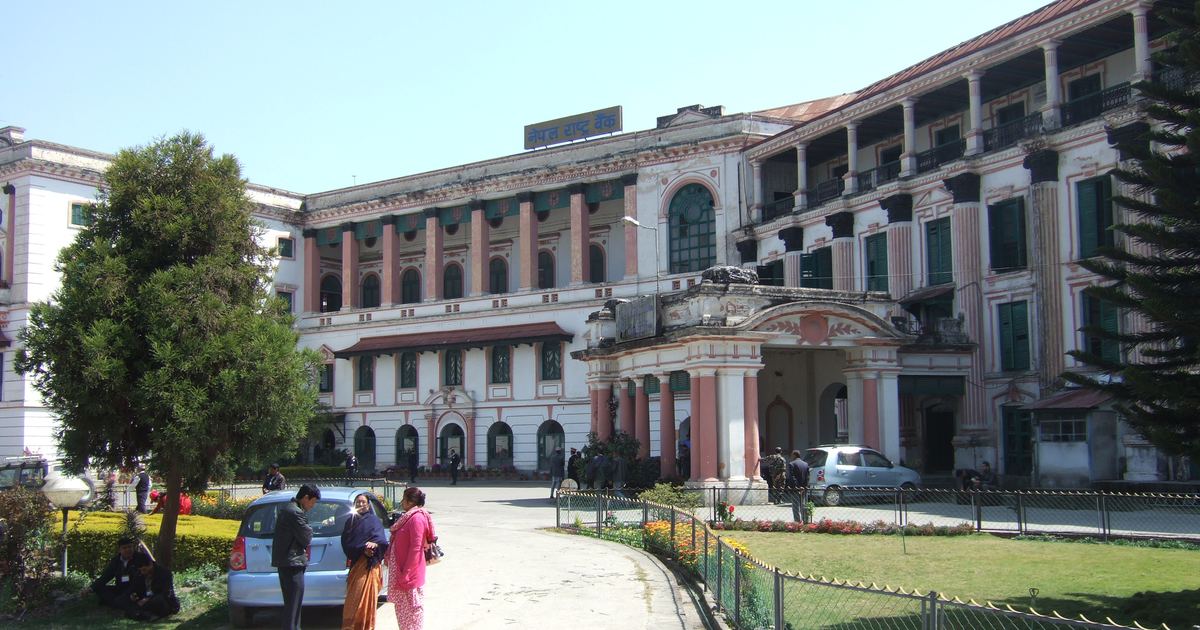
On September 16, 2026, the House of Representatives' Finance Committee approved its report on the Third Amendment Bill to the Nepal Rastra Bank Act, 2083. The bill that went into Parliament was meant to strengthen the central bank's independence. The version that came out of the committee points the other way. The government keeps its power to issue directives on currency, banking and finance. The governor's five-year term becomes three, with a government-granted extension as the consolation. And supporting the government's economic policy becomes one of the bank's stated objectives, equal in rank to price stability itself.
Start with what this bill was supposed to be. The government tabled the amendment in June 2026 with Finance Minister Swarnim Wagle telling Parliament it would give Nepal Rastra Bank greater operational independence, as part of commitments under the IMF's Extended Credit Facility: Nepal received USD 43 million under the facility, and the government's own framing was that amending the central bank law was required to strengthen autonomy, per Fiscal Nepal's reporting of the tabling. The original draft proposed repealing Section 106(c) of the existing Nepal Rastra Bank Act, 2058, the provision that lets the government issue directives to the bank. It also proposed removing the finance secretary from the bank's board. Both changes matched the IMF's conditions for strengthening central bank autonomy.
Three changes, one direction
The Finance Committee reversed course on nearly every one of those points, as detailed by OnlineKhabar's October 13 reporting on the committee's report. First, the directive power stays. UML lawmaker Guru Prasad Baral registered an amendment removing the provision that would have repealed Section 106(c), and with backing from lawmakers on the governing side, the committee decided to retain the government's authority to direct the central bank on currency, banking and finance. RSP lawmaker Nitima Bhandari Karki defended the retention, arguing that the existing provision had not created problems and that directives could help organise the bank's work in support of government policies, plans and programmes. The directive power itself is not ancient: it entered the law through a 2016 amendment.
Second, the hierarchy of the bank's objectives was flattened. The government's original formulation made price stability the key objective and required the bank to maintain banking, financial and external sector stability, with support for government economic policy allowed only where it did not adversely affect those objectives. Under the committee-approved version, proposed by Finance Committee chair Krishna Hari Budhathoki, the bank carries three independent objectives: price stability, stability of the banking and financial sectors and the external sector, and supporting the implementation of the government's economic policies. Supporting government policy moves from a subordinate clause to a headline duty. Critics argue this means the bank could face pressure to align monetary policy with the government's priorities even when the two conflict, for instance if the government wants easier credit while inflation needs tighter policy.
Third, and most visible, the tenure of the governor, deputy governors and board directors drops from five years to three, with the government able to extend terms by up to two years based on performance. RSP lawmaker Sunil Khadka had registered an amendment proposing four years; the committee went further and settled on three plus a two-year government-granted extension. The finance secretary's seat on the board, which the IMF conditions wanted removed, survives as well.
The extension is the point
Opposition lawmakers have focused their fire on the tenure mechanism, and the logic deserves a plain hearing. Under a five-year fixed term, a governor can disagree with the government and still finish the job. Under a three-year term with the final two years subject to a government performance review, the incentive structure inverts: the governor has reason to stay in the government's good graces to earn the extension. UML lawmaker and committee member Pushpa Kandel made exactly this argument, saying the arrangement could make the governor more dependent on the executive.
It goes further than warnings. Parashuram Tamang of the Nepali Communist Party, a committee member, said he had proposed establishing a monetary policy committee, requiring Nepal Rastra Bank to submit its annual report to Parliament, and removing the government's power to issue directives. Those amendments were not incorporated. Tamang formally recorded his dissent when the committee approved the bill and said he intended to raise the issue again during parliamentary deliberations. Nepali Congress lawmaker Khadga Shahi said the current government was weakening the central bank's autonomy more than previous governments had attempted, and alleged the tenure provisions had initially been designed to shorten the governor's term to two years, motivated in part by a desire to remove the incumbent governor sooner. The final version settled at three years plus the possible extension.
The IMF problem
None of this happens in isolation. As part of the conditions attached to the IMF's Extended Credit Facility, Nepal was required to amend the central bank law to strengthen its autonomy. The government's original bill incorporated those measures. The committee's approved report keeps the finance secretary on the board, preserves the government's directive power, makes government-policy support an independent objective, and shortens senior officials' guaranteed tenure. Those are not adjustments to the IMF's conditions. They are reversals of them. Nepal is moving toward the final phase of the facility, when compliance with structural reforms is what the Fund reviews.
Defenders of the changes, like RSP's Nitima Bhandari Karki, argue the directive power has caused no practical problems and that coordinating with government policy is legitimate work for a central bank. That argument has a grain of truth: monetary and fiscal policy do interact, and no central bank operates in a vacuum. But there is a difference between coordination and command. A directive power on currency, banking and finance, combined with a shortened term whose extension depends on the government's assessment, moves the institution closer to the second. Central bank independence exists precisely for the moments when the two authorities disagree.
The honest limits are worth stating. A committee report is not yet law. The full House must still deliberate, dissenting MPs have said they will raise the issue again, and the final text could still change before passage. No one can say today what the statute will look like. What can be said is what the committee signed off on, and the direction of that signature is unmistakable: more government direction, shorter guaranteed tenures, and policy support written into the bank's mandate.
The central question, as OnlineKhabar framed it, is whether the amendments will let Nepal Rastra Bank fulfil its mandate independently or make it more directly accountable to the government of the day. That question is still open, and so is the one the IMF will eventually ask: whether Nepal rewrote its central bank law to meet its commitments, or to undo them.
This article is published for research and education purposes only. It is not investment advice, and nothing here should be read as a recommendation to buy, sell, or hold any security. Figures cited reflect publicly reported information at the time of writing and may be revised as new information is published.