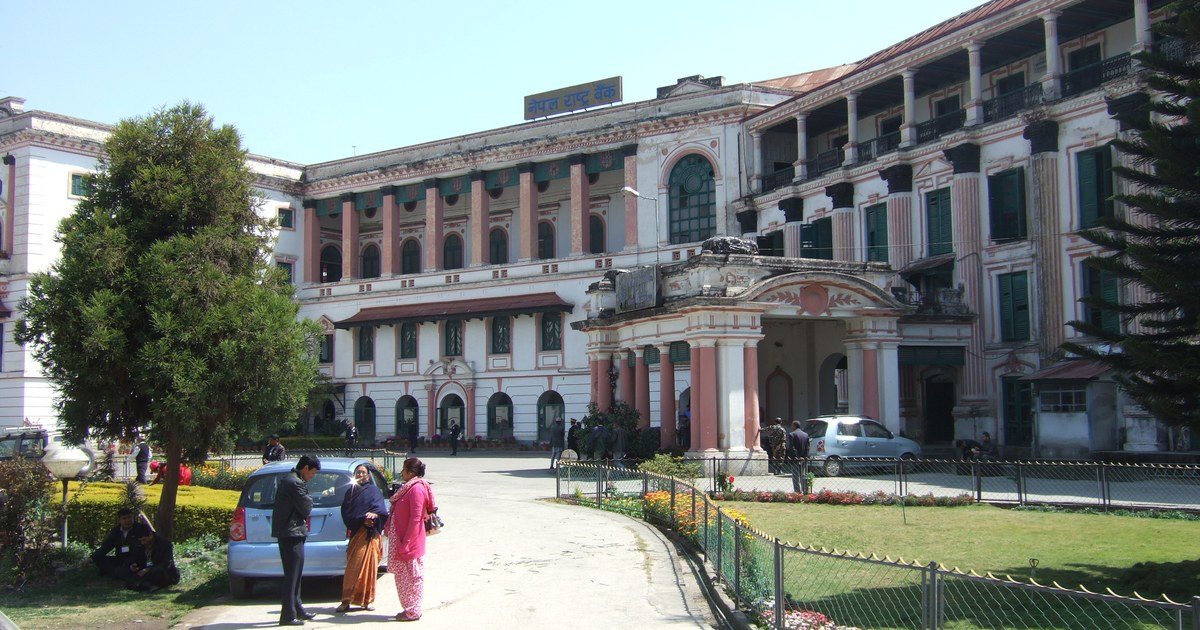
Nepal Rastra Bank has issued the implementation directive for the first quarterly review of this fiscal year's monetary policy, and the headline move is a rate cut. The policy rate falls from 4.50 percent to 4.25 percent. The standing liquidity facility rate, the upper bound of the interest rate corridor, comes down from 6 percent to 5.75 percent, while the lower bound stays at 2.75 percent. The cash reserve ratio and the statutory liquidity ratio are unchanged. The directive was reported by Insurance Khabar as the central bank instructed banks, financial institutions, and microfinance lenders to amend their unified directives accordingly.
A rate cut is supposed to make borrowing cheaper and coax money out of the banking system into the economy. The awkward part is that Nepal's banking system is already flooded with money it cannot place. Banks are sitting on excess liquidity while credit demand stays weak, the condition this blog described in detail earlier this month. When the binding constraint is borrowers rather than the cost of funds, a quarter-point cut to the policy rate is a signal more than a solution. Interbank rates in a surplus system already hug the floor of the corridor; moving the midpoint down changes the weather vane, not the weather.
The review's other measures are more targeted, and they read like a response to two specific pressures. The first is the August and September floods. Banks and financial institutions may now restructure or reschedule, on a one-time basis, the loans of enterprises and businesses in Ilam and other flood and landslide hit districts, charging a minimum interest rate of 10 percent. For borrowers whose factories, fields, or hydropower intakes were damaged, the alternative to restructuring is default, and the central bank has chosen forbearance over a wave of bad loans.
The second pressure is the microfinance sector, where repayment stress has been building for two years. The maximum loan a microfinance institution can disburse against collateral rises from Rs 7 lakh to Rs 15 lakh, and lenders get room to modify repayment schedules for struggling borrowers. Read one way, this is relief for households that cannot meet their installments. Read another way, it lets the same stressed borrowers take on larger loans, which is a gamble that the extra credit restores incomes rather than deepening the debt. The review does not resolve that tension. It picks a side and hopes. There is an irony in the microfinance measures that deserves a straight look. Two weeks ago, this blog noted that Nepal's microfinance lenders posted record profits while their bad loans grew even faster. Now the same sector gets repayment-schedule relief and a higher per-borrower loan ceiling. The central bank is treating two different patients: the lenders, who need discipline, and the borrowers, who need breathing room. Both diagnoses can be right at once, but only if the new credit reaches incomes rather than arrears.
The most curious change is the one the central bank scrapped. Until now, banks had to offer institutional fixed deposit rates at least one percentage point below individual fixed deposit rates. That rule is gone. In an environment of excess liquidity, letting banks pay institutions more for deposits they do not need looks odd at first glance. But the rule was a distortion: it forced a wedge between two classes of depositors that had no economic basis, and its removal lets deposit pricing reflect the market. Whether banks use the freedom to chase deposits they cannot lend is a question for their own balance sheets.
The personal overdraft limit doubles from Rs 50 lakh to Rs 1 crore, with a catch that reveals the central bank's caution: banks must maintain a 100 percent loan-loss provision on any amount above the limit. The message is two-handed. Borrow more if you must, but the system will treat the excess as already lost. It is easing with the seatbelt on. The corridor itself tells the story of how little the headline cut bites. With the standing deposit facility at 2.75 percent and the standing liquidity facility at 5.75 percent, the corridor spans three full percentage points, and in a surplus system the market rate sits near the floor no matter where the midpoint is set. Moving the policy rate from 4.50 to 4.25 percent narrows nothing at the bottom and loosens nothing at the top. It is the central bank saying, in the only language it has, that it would like to see more lending.
Step back and the review has a coherent shape, even if it will not fix the core problem. The rate cut keeps the stance visibly accommodative. The flood restructuring and the microfinance relief address real distress in specific places. The scrapped deposit rule removes a distortion. What none of it does is manufacture borrowers. Nepal's credit problem is demand: businesses are not investing, households are cautious, and the economy's growth is carried by remittances rather than domestic enterprise. A central bank can lower the price of credit. It cannot lower the fear of borrowing, and that is the number this review leaves untouched.
This article is published for research and education purposes only. It is not investment advice, and nothing here should be read as a recommendation to buy, sell, or hold any security. Figures cited reflect publicly reported information at the time of writing and may be revised as investigations proceed.