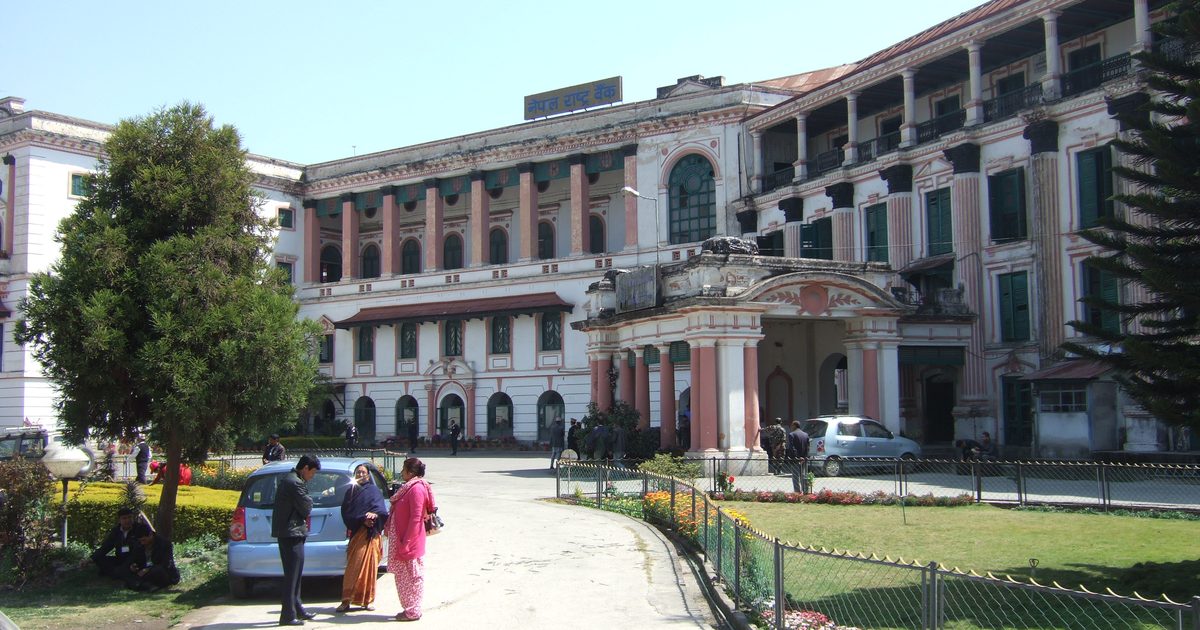
The government has formed a study committee to decide what to do with Nepal's record foreign exchange reserves. According to a report by Fiscal Nepal, the committee is coordinated by Nepal Rastra Bank Deputy Governor Kiran Pandit and includes a joint secretary from the Ministry of Finance and executive directors of the central bank. Its task is to prepare a framework for the use and investment of the reserves, with a concrete timeline attached.
The size of the pile is what makes this interesting. Nepal's total foreign exchange reserves reached Rs 4.07 trillion by mid-September 2026, enough to cover 20.9 months of merchandise imports, according to data from Nepal Rastra Bank reported by OnlineKhabar. For context, the central bank's own monetary policy for fiscal year 2083/84 sets its target at keeping reserves at a level covering at least seven months of goods and services imports. Nepal is sitting on roughly three times its own safety floor.
This is not a new idea. Finance Minister Dr. Swarnim Wagle announced the creation of a sovereign wealth fund in the FY 2083/84 budget in June 2026, as covered by ShareSansar at the time. Governor Dr. Biswo Nath Paudel's case, made at the post-budget press conference, runs like this: reserves cover well over 18 months of imports when the accepted safe norm is around seven months, and the pile is earning only about 4% a year sitting in low-yielding accounts. The argument is that a portion of the excess could be invested in infrastructure, energy projects and other productive sectors that create jobs and growth, instead of lying nearly idle.
Where the money came from matters more than the size. The reserve build-up is driven by remittances: Nepali workers abroad sent home Rs 436 billion in just the first two months of this fiscal year, up 23.9% from a year earlier. That is the engine behind the war chest, and it is worth pausing on. Remittance income depends on foreign labour markets and migration policy, neither of which Nepal controls. A pile built by today's remittance surge can shrink quickly if inflows slow while import demand stays strong. Nepal imports most of what it consumes, and the import bill, not the reserve stock, is the faster-moving number.
That is essentially the counter-argument economists are making, and some of them are making it pointedly. In a recent piece on what it called the forex paradox, New Business Age reported on Governor Paudel's remark that Nepal's reserves were sufficient to service its roughly $10 billion foreign debt, and on the swift backlash from economists who called the reasoning flawed. The critics' position, as reported, is that reserves exist to stabilize the economy, maintain investor confidence and finance essential imports, not to repay government loans or bankroll investments. One economist's line, quoted in the piece, does the work of a paragraph: "If paying debt were that easy, Sri Lanka would never have defaulted." Investing the reserve in long-term domestic assets changes the risk profile of the insurance policy, and insurance that is no longer liquid is no longer insurance.
There is also the question of institutions. One analysis of the proposal, published on Substack, argues that Nepal should study Singapore's GIC, the sovereign wealth fund created in 1981 when Singapore found itself holding more reserves than monetary stability required. The striking point in that account is that the first questions were not about returns but about purpose, governance and institutional design: the fund was an act of institution-building before it was an investment vehicle. Nepal's version of that lesson is that a committee writing a framework is the easy part. Building an institution that can invest public money with discipline, transparency and independence from politics is the harder one, and nothing in the committee's mandate guarantees it.
Some honesty about the numbers is also owed. The 20.9-month import cover is a snapshot from mid-September, and single-month readings can be noisy. The committee's formation itself is a process step, not a decision: the institutional structure, investment framework, funding mechanism and safeguards all still have to be designed and then survive political reality, as Fiscal Nepal's own report notes. And while reserves have kept climbing, the rest of the picture is mixed. Inflation stood at 6.34% year on year in mid-September, triple the rate of the same period last year, while banks are still struggling to find borrowers despite excess liquidity. The economy is not short of money in the vault. It is short of places to put it that earn a return worth the risk.
Nepal has the kind of war chest policymakers once only wrote speeches about. Whether it stays a shield or becomes an investment portfolio is now, for the first time, an official question with a committee attached and a timeline demanded. The answer will say less about investment returns than about what the country believes its savings are for: protection against the day the remittances slow, or fuel for the projects the domestic economy has never quite managed to build. The committee gets to write the first draft. The money gets the last word.
This article is published for research and education purposes only. It is not investment advice, and nothing here should be read as a recommendation to buy, sell, or hold any security. Figures cited reflect publicly reported information at the time of writing and may be revised as new data is published.