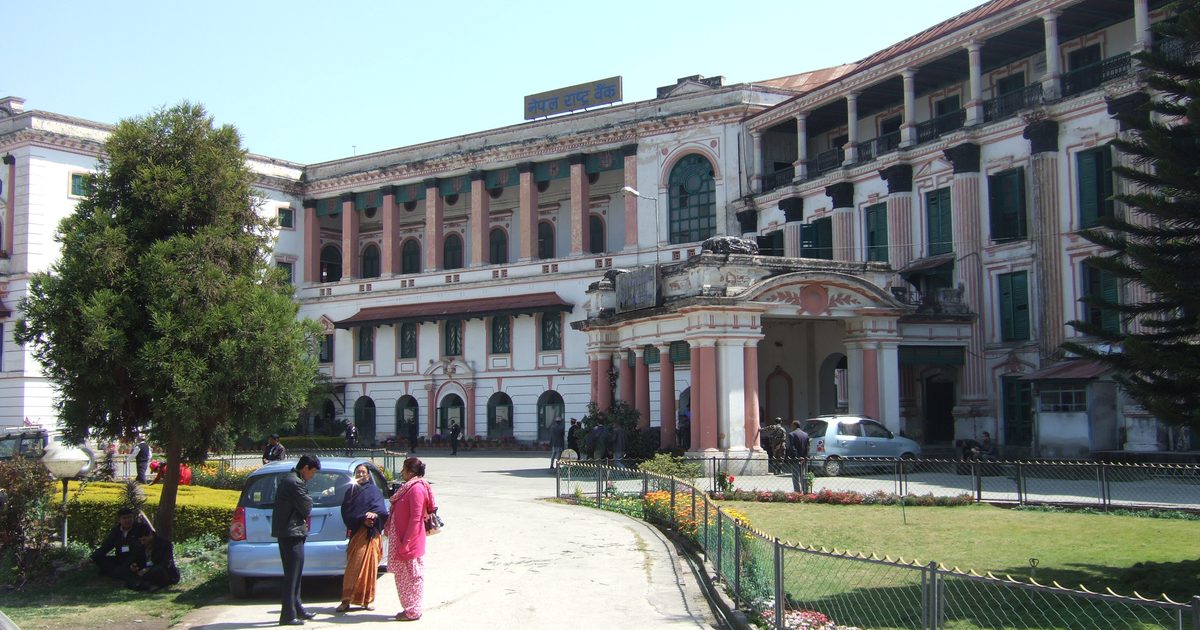
On October 5, 2026, Nepal Rastra Bank's Foreign Exchange Management Department issued an amendment to the Unified Circular 2082 that rewrote the country's dollar payment limits. The annual foreign exchange facility for Nepalese seeking medical treatment abroad doubled to $30,000 from $15,000. The payment ceiling for telecom companies renting satellite services jumped fivefold, to $500,000 from $100,000. Advance payments for repairing aircraft engines and spare parts abroad rose from $100,000 to $500,000. It was the most comprehensive loosening of Nepal's foreign exchange rules in years, and it arrived barely a week after the central bank cut interest rates into a banking system already drowning in cash.
Nepal's forex controls have always been a rationing system: the country imports far more than it exports, dollars are finite, and the central bank decides who may send them abroad and how much. Every limit in the circular is a valve. This month, NRB opened most of them wider. Commercial banks can now provide up to $30,000 in a single foreign currency transaction when the relevant regulator has approved or recommended it, up from $15,000, and payments above $30,000 still require NRB's own approval. The limit for imports financed through export earnings rose to $30,000 for third-country imports and INR 6 million for imports from India, up from $12,000 and INR 3 million respectively, according to Farsight Nepal. For imported services, advance payments above $30,000 still require a bank guarantee from a foreign bank, so the paperwork survives; only the ceiling moved.
The loosening has a single funder: record reserves
NRB is not loosening out of generosity. It is loosening because the vault is full. Nepal's foreign exchange reserves stood near Rs 3.95 trillion in the first month of fiscal year 2026/27, according to Fiscal Nepal, a record built almost entirely on remittances. Inflows hit Rs 2.363 trillion in FY2025/26, up 37.1 percent, and the new fiscal year opened with Rs 215.05 billion in its first month, up 21.2 percent year on year. Bank deposits touched an all-time high of Rs 8.426 trillion by early October, as Nepse Trading reported. A central bank with this balance sheet can afford to stop rationing. The relevant comparison is not a policy preference but an arithmetic one: when dollars stop being scarce, controlling them stops being urgent.
This is also the second act of a pattern, not the first. In late 2024, NRB issued the Unified Circular 2080 and raised the same medical treatment limit from $10,000 to $15,000, explicitly because reserves had reached a comfortable level. Two years later, the same cap has doubled again. In three years the medical allowance has tripled, from $10,000 to $30,000, and each loosening was tied to the same trigger: comfortable reserves. NRB's dollar valves open and close on a cycle. The current direction is open.
Who gains from the open valves
The beneficiaries are not random. Nepali companies borrowing abroad in IT, agriculture, manufacturing, infrastructure, tourism and energy can now receive foreign currency guarantees or standby letters of credit from Class A commercial banks, with energy industries added to the eligible list for the first time. That matters for large hydropower developers, whose funding bottlenecks have been a standing complaint. Online service exporters get their own lane: foreign currency earned from service exports can now be credited directly to payment cards, and exporters may spend abroad an amount equal to their forex earnings plus an additional $500, subject to an annual ceiling of $10,000. Travel and tour agencies can pay foreign agents on invoice after services are rendered. Banks may invest up to 50 percent of their foreign currency agency balances, up from 40 percent, in highly liquid foreign government bonds or hedging instruments for tenures up to five years. Read together, the circular moves Nepal's forex regime toward a specific future: one where dollar inflows from services and energy exports matter as much as remittances do.
What the circular left untouched
The ceilings moved, but the architecture did not. Payments above $30,000 still need NRB's explicit approval. Large advance payments for imported services still require a foreign bank guarantee. Card balances above $10,000 must be swept into bank accounts. The rationing system is intact; it has simply been recalibrated for a world of plenty. That is the detail that should keep investors and importers calm: this was a loosening, not an abolition. The central bank kept its hand on every valve that matters at scale.
The real caveats sit underneath the numbers. The first-month remittance growth of 21.2 percent looks stronger than it is: in US dollar terms the increase was 10.2 percent, and the gap between the two is the rupee's own weakness flattering the rupee number, a point Nepalytix has made. One month of data is a noisy read, not a trend. And the entire surplus rests on a narrow base: migrant workers sending money home, not a diversified export sector. If remittance growth stalls, as the weakening flow of new foreign-employment approvals hints it could, the reserves that funded this loosening drain the way they filled: quietly, then quickly.
NRB's recent history makes that risk concrete. The central bank that loosens when reserves are comfortable is the same institution that tightened them when they were not. History describes what happened; it does not dictate what comes next. For now the vault is full and the valves are open, and Nepali businesses that need dollars face less paperwork than at any point in a decade. The question the circular does not answer is what happens the next time the vault drains. Forex controls return the way they always return: suddenly, and in the middle of the cycle that needed them most.