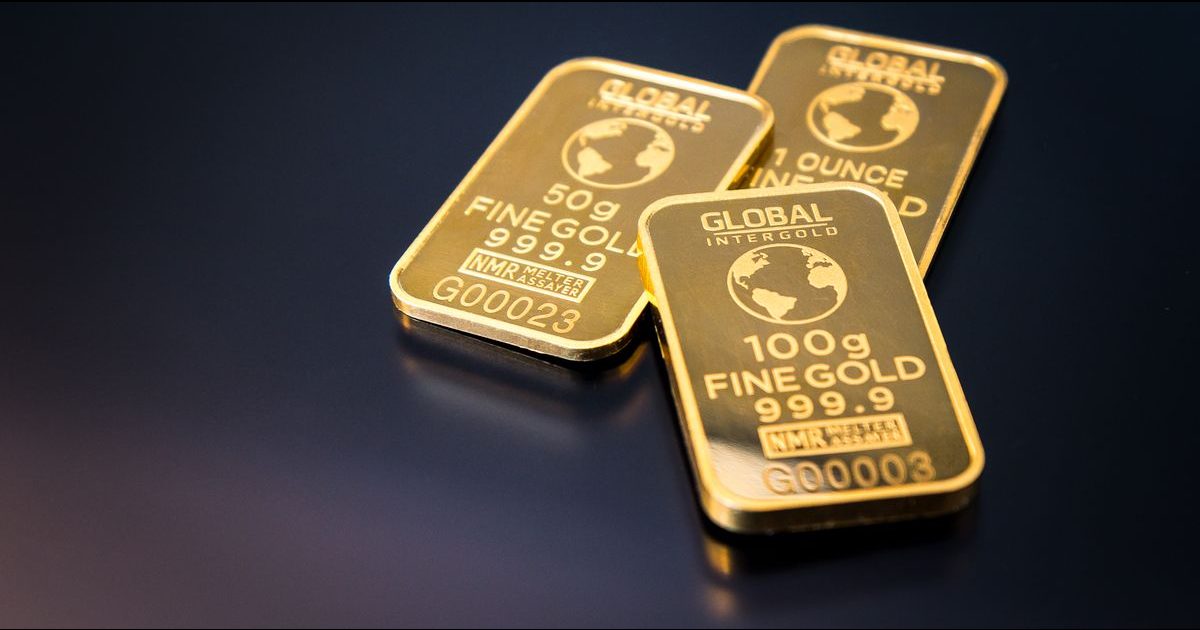
On Friday, October 2, the Federation of Nepal Gold and Silver Dealers' Association fixed fine gold at Rs 294,800 per tola. Silver touched Rs 4,450 a tola the same day. Read those numbers against the international market and something looks off: gold in dollars is down about 23% from its January peak, yet in Kathmandu the tola price has slipped barely 1% since August.
The tola price is not set in Kathmandu. It is translated there. The Federation builds its daily rate from two inputs: the international gold price and the rupee's exchange rate against the dollar. When those two dials turn in opposite directions, the local price follows neither one fully. That is the whole story this year, and the arithmetic is worth doing once, carefully.
Start with the global dial. Spot gold traded near $4,106 an ounce on October 8, according to live spot trackers at thegoldprice.net. A tola is 11.6638 grams, which is 0.375 of a troy ounce, so one ounce makes 2.6667 tolas. Divide $4,106 by 2.6667 and a tola of pure gold costs about $1,540 before it crosses any border. The metal peaked at $5,318.40 an ounce on January 29, so in dollar terms it has fallen roughly 23% since.
Now the second dial. Nepal Rastra Bank's reference rate sat near Rs 154 to the dollar this week (buying 153.98, selling 154.58 on October 7). Multiply $1,540 by 154 and raw international parity lands near Rs 237,100 a tola. The Federation's rate was Rs 294,800, roughly 24% above parity. The wedge is not a mystery, and it is not a rounding error either.
Nepal charges a 10% customs duty on gold imports, halved from 20% by a cabinet decision meant to narrow the smuggling incentive across the open border with India, where duties had been cut the other way. On top of duty come VAT, dealer margins, and the cost of a tightly rationed supply: Nepal Rastra Bank lets commercial banks import at most 25 kilograms of gold a day, a quota traders have long argued should be 40. A market study of Nepal's gold trade by IndexBox puts the typical retail premium over international parity at 10 to 25%. This week's 24% sits at the top of that range, which is what a quota-bound market looks like when demand runs hot.
Demand does run hot in October. The wedding and festival season, roughly October to February, concentrates an estimated 60 to 70% of Nepal's annual gold jewellery demand, and remittances worth a fifth to a quarter of GDP fund much of it, according to the same IndexBox study. In the first four months of the fiscal year, Nepal imported 902 kilograms of gold, up 580% from a year earlier, at a foreign-exchange cost of Rs 15.72 billion, Aarthik News reported citing Department of Customs data. The system rations supply by the kilogram while demand follows the calendar, not the price. A premium near the top of the range is the predictable result.
Back to the two dials, because this is where the 23% becomes a 1%. In a market where the currency stood still, the tola price would have tracked gold's dollar fall almost one for one. But the rupee did not stand still. It weakened into the mid-150s per dollar, and the Federation's formula multiplies the two inputs, so a weaker rupee offsets a weaker gold price almost mechanically. Kathmandu's tola fell roughly 1% from its August level near Rs 296,900 while the dollar price fell more than a fifth from its peak. The currency absorbed the difference. In rupee terms, gold has behaved like a partial hedge against the currency's own slide this year.
The global backdrop explains why the dollar dial is turning at all. The United States government shut down on October 1, furloughing most of the Bureau of Labor Statistics and delaying the September jobs report. The Federal Reserve meets October 27 and 28 to decide whether to lift rates again from the 3.75 to 4.00% range or pause, and it will now decide with thinner data than usual, MarketsNxt notes. Gold eased 0.3% to $4,150.23 an ounce on October 7 as traders positioned for the Fed's September meeting minutes, Qatar News Agency reported. None of this sets the Kathmandu price directly. It moves the London dial; the rupee and the duty decide how much of that movement reaches New Road.
A few honest limits before the close. The Federation's daily rates reach the public through media reports, and single-week readings are noisy: silver, for one, has swung several hundred rupees per tola in a matter of days this season. The duty, the quota, and the exchange rate are policy choices, and policy choices change. And history here describes what happened, it does not dictate what comes next. The same multiplication that cushioned this year's fall would amplify a rise if the dollar price and the rupee ever turned the same way together.
For now the two dials disagree, and Kathmandu pays the average of their argument. The open question is not where gold goes next. It is how long the rupee keeps translating a falling global price into a steady local one.
This article is published for research and education purposes only. It is not investment advice, and nothing here should be read as a recommendation to buy, sell, or hold any security. Figures cited reflect publicly reported information at the time of writing and may be revised.