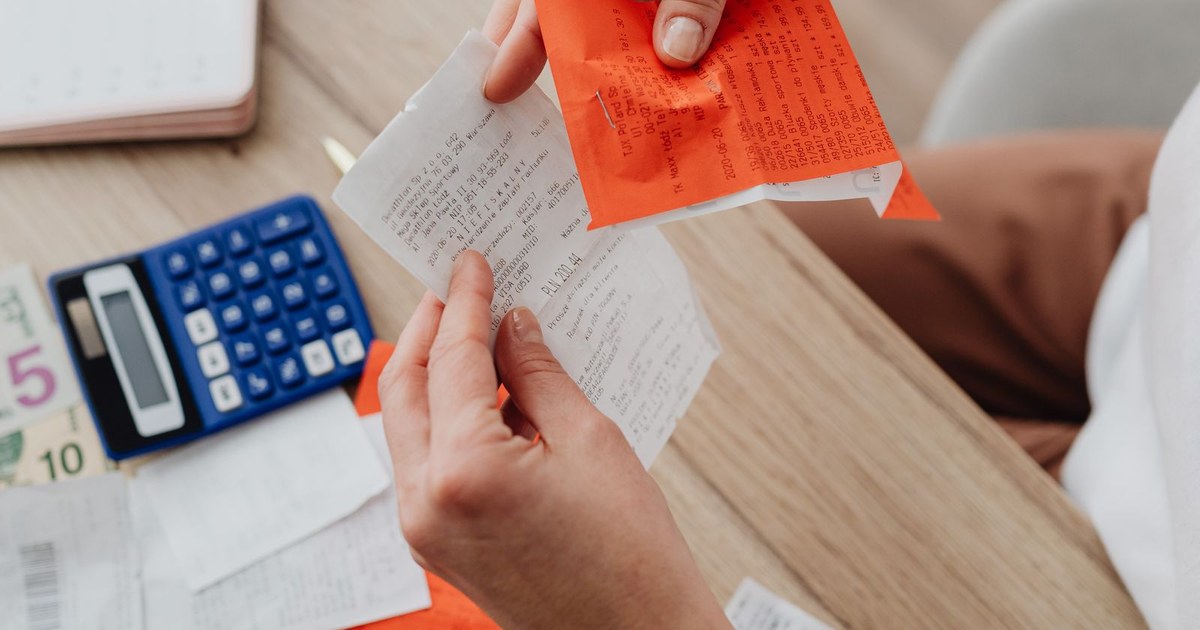
A share on your screen rises from Rs 500 to Rs 600, and the mental arithmetic feels automatic: Rs 100 profit per share. But the price on the screen is not what lands in your account. Buying costs money, selling costs money, and the taxman takes a share of what is left. Work through one complete trade, and the Rs 100 shrinks to Rs 90.78 — before you have even thought about whether the trade was a good idea.
The four layers of cost
Every NEPSE trade for a resident individual carries the same four charges. The first three are levied on each side of the trade; the fourth applies only to the profit:
| Charge | Rate | When it applies |
|---|---|---|
| Broker commission | 0.36% up to Rs 50,000; 0.33% from Rs 50,001 to Rs 500,000 (minimum Rs 10) | Buy and sell |
| SEBON fee | 0.015% of the trade value | Buy and sell |
| DP charge | Rs 25 per scrip per side | Buy and sell |
| Capital gains tax (CGT) | 5% if held 365 days or fewer; 3.75% if held longer | On the net gain only |
Two honesty notes before the numbers. First, this article uses only the two lowest commission slabs, because those are undisputed across every source checked; larger trades fall into lower slabs, whose top-bracket rates still differ between portals. Second, the DP charge follows the Nepse Decode calculator's convention of Rs 25 on each side — some portals describe it as sell-side only. If your broker charges DP only on sale, the example below would cost Rs 50,187.50 to buy and leave a net profit of Rs 9,102.72. Either way, the convention is stated, not hidden.
The worked example: 100 shares, Rs 500 to Rs 600
Buy 100 shares at Rs 500, sell them at Rs 600. The price gain is Rs 10,000. Here is where it goes:
| Step | Calculation | Amount |
|---|---|---|
| Buy value | 100 × Rs 500 | Rs 50,000 |
| Buy charges | Commission Rs 180 + SEBON Rs 7.50 + DP Rs 25 | Rs 212.50 |
| Total cost of buying | Rs 50,000 + Rs 212.50 | Rs 50,212.50 |
| Sell value | 100 × Rs 600 | Rs 60,000 |
| Sell charges | Commission Rs 198 + SEBON Rs 9 + DP Rs 25 | Rs 232 |
| Net sale proceeds | Rs 60,000 − Rs 232 | Rs 59,768 |
| Gain before tax | Rs 59,768 − Rs 50,212.50 | Rs 9,555.50 |
| CGT at 5% (short-term) | 5% × Rs 9,555.50 | Rs 477.78 |
| Net profit | Rs 9,555.50 − Rs 477.78 | Rs 9,077.72 (Rs 90.78 per share) |
Note why the sell commission is Rs 198, not Rs 216: the Rs 60,000 sale falls in the 0.33% slab, while the Rs 50,000 purchase falls in the 0.36% slab. The two sides of one trade can sit in different slabs. And the charges alone — Rs 444.50 before tax — already eat 4.4% of the apparent Rs 10,000 gain.
The break-even price: Rs 504.11
The most useful number in this article is not the profit — it is the price at which you stop losing money. To recover the buy cost and the sell-side charges on 100 shares bought at Rs 500, the sell price must reach Rs 504.11, or 0.82% above the purchase price. Sell at Rs 501, Rs 502 or Rs 503 and the price has risen — but after charges, you are still in the red. Every trade starts underwater, and the first 0.82% of any rise merely gets you back to zero.
Why small trades cost proportionally more
Round-trip charges excluding CGT fall as the trade grows, because the percentage charges shrink in slab terms while the fixed Rs 25 DP charge is spread over a larger amount:
| Trade size | Round-trip charges | Share of trade |
|---|---|---|
| Rs 50,000 | Rs 425 | 0.85% |
| Rs 100,000 | Rs 740 | 0.74% |
| Rs 500,000 | Rs 3,500 | 0.70% |
The practical lesson is about frequency, not size alone. The Rs 10 minimum commission and the Rs 25 DP charge weigh heaviest on the smallest trades, so splitting one trade into many small ones — or trading in and out of the same stock repeatedly — multiplies the fixed charges while the percentage charges stay roughly the same. The cheapest trade is often the one you do not repeat.
The tax cut many calculators still miss
The CGT rates in the example — 5% for holdings of 365 days or fewer, 3.75% for longer holdings — come from a Ministry of Finance notice published in the Nepal Gazette (volume 76, additional 40, part 5) on 31 Bhadra 2083, or 16 September 2026, which halved the rates in the Finance Act 2083. Several calculator pages still show the old 10% and 7.5% rates; on the example's gain, the old short-term rate would have taken Rs 955.55 instead of Rs 477.78. If a calculator quotes you 10% or 7.5%, it is out of date. On the same gain, holding past the 365-day line would cut the tax further, from Rs 477.78 to Rs 358.33 — the one part of the cost stack where patience pays directly.
None of this makes the Rs 500-to-Rs 600 trade a bad one: keeping Rs 9,077.72 from a Rs 10,000 price move is a good outcome. It only means the decision should be made on Rs 90.78 per share, not Rs 100 — and on a break-even of Rs 504.11, not Rs 500. Price targets set without charges are targets set on the wrong numbers.
Frequently asked questions
Why do trading costs apply on both the buy and the sell?
Broker commission, the SEBON fee and the DP charge are levied per transaction, not per round trip. Buying is one transaction and selling is another, so each side carries its own charges. That is why the worked example pays Rs 212.50 to buy and Rs 232 to sell.
Is CGT charged on the full sale amount or only on the profit?
Only on the net gain: after-charge sale proceeds minus fee-inclusive purchase cost. In the example the gain is Rs 9,555.50, so CGT at 5% is Rs 477.78. If you sell at a loss, no CGT is due on that trade.
Why does the 365-day holding period matter?
Under the Ministry of Finance notice in the Nepal Gazette (31 Bhadra 2083), a resident individual pays 5% CGT if the shares are held for 365 days or fewer, and 3.75% if held longer. On the example's Rs 9,555.50 gain, holding past a year would cut the tax from Rs 477.78 to Rs 358.33.
Why do small trades cost proportionally more?
The Rs 10 minimum commission and the Rs 25 DP charge are fixed amounts, so they weigh heaviest on small trades. Round-trip charges excluding CGT are 0.85% of a Rs 50,000 trade but 0.70% of a Rs 500,000 trade — which is why frequent small trades are the most expensive habit.
How do I calculate the cost of my own trade?
Use Nepse Decode's free share-cost calculator at /nepse-calculators/: enter the quantity and buy and sell prices, and it returns the buy cost, sale proceeds, gain, CGT and net profit on the same verified schedule used in this article.
Sources: Nepse Decode's share-cost calculator at /nepse-calculators/ (commission slabs 0.36% to Rs 50,000 and 0.33% to Rs 500,000 with a Rs 10 minimum, SEBON fee 0.015% per side, DP charge Rs 25 per scrip per side); Ministry of Finance notice, Nepal Gazette volume 76, additional 40, part 5, 31 Bhadra 2083 (16 September 2026) for the 5% / 3.75% CGT rates. The worked example reproduces the calculator exactly; the DP convention follows the calculator, and the alternative sell-only convention is noted in the text. This article is published for research and education purposes only. It is not investment advice, and nothing here should be read as a recommendation to buy, sell, or hold any security.